Safety & ID · 9 min read · June 1, 2026
Chanterelle vs. Jack-o'-Lantern Mushroom: How to Tell the Difference Before You Eat
Chanterelles are one of the Pacific Northwest's most beloved edible mushrooms — golden, fruity-scented, and worth every minute of trail time to find. But every season, foragers mistakenly bring home jack-o'-lantern mushrooms (Omphalotus olivascens on the West Coast) instead, triggering hours of violent gastrointestinal illness [1]. The good news: once you know the five diagnostic differences between these two species, you'll never mix them up again.
- The core danger: Jack-o'-lantern mushrooms contain sesquiterpene toxins (illudin M and illudin S) that cause severe nausea, vomiting, abdominal cramps, and diarrhea within 1–3 hours of ingestion [1].
- The confusion factor: Both species display vivid orange-yellow coloring and fruit in autumn, often near oaks and conifers — the same habitat where chanterelles thrive [2].
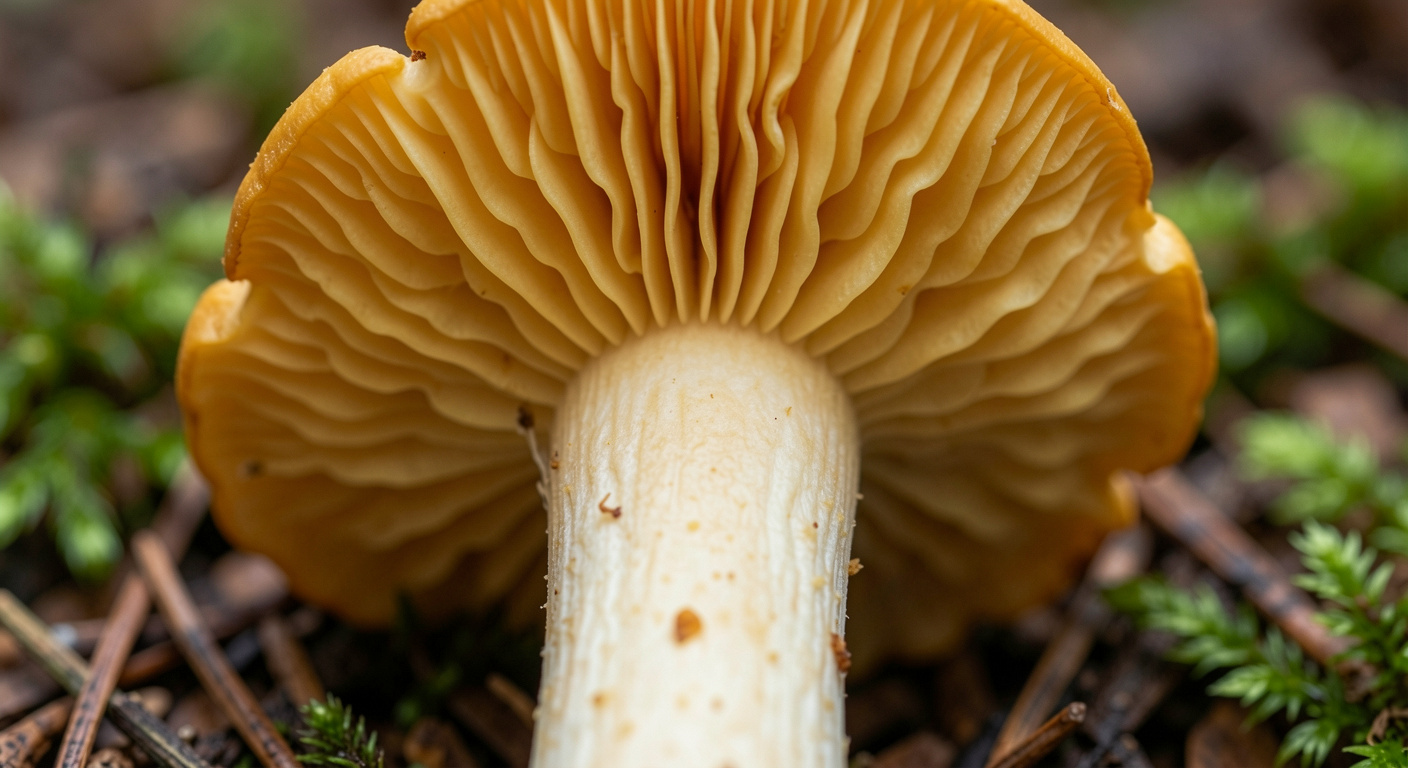
- The single most reliable field feature: Chanterelles have false gills (forking, blunt ridges that run down the stem); jack-o'-lanterns have sharp, knife-blade true gills [3].
- Growth habit matters: Jack-o'-lanterns grow in dense clusters directly on wood or buried roots; chanterelles grow singly or in small scattered groups from soil [2].
- A bonus ID trick: In total darkness, fresh jack-o'-lantern mushrooms emit a faint green bioluminescence — chanterelles do not glow [4].
- The stakes: NAMA's toxicology resources list gastrointestinal irritants as the most commonly reported mushroom poisoning category in North America, with misidentification of edible look-alikes as a leading cause [1].
| Feature | Golden Chanterelle (Cantharellus cibarius / C. formosus) | Jack-o'-Lantern (Omphalotus olivascens) |
|---|---|---|
| Gill type | False gills: blunt, forking ridges | True gills: sharp, crowded blades |
| Growth habit | Solitary or scattered; from soil | Dense clusters; on wood or buried roots |
| Cap color | Egg-yolk yellow to pale gold | Bright orange to orange-brown |
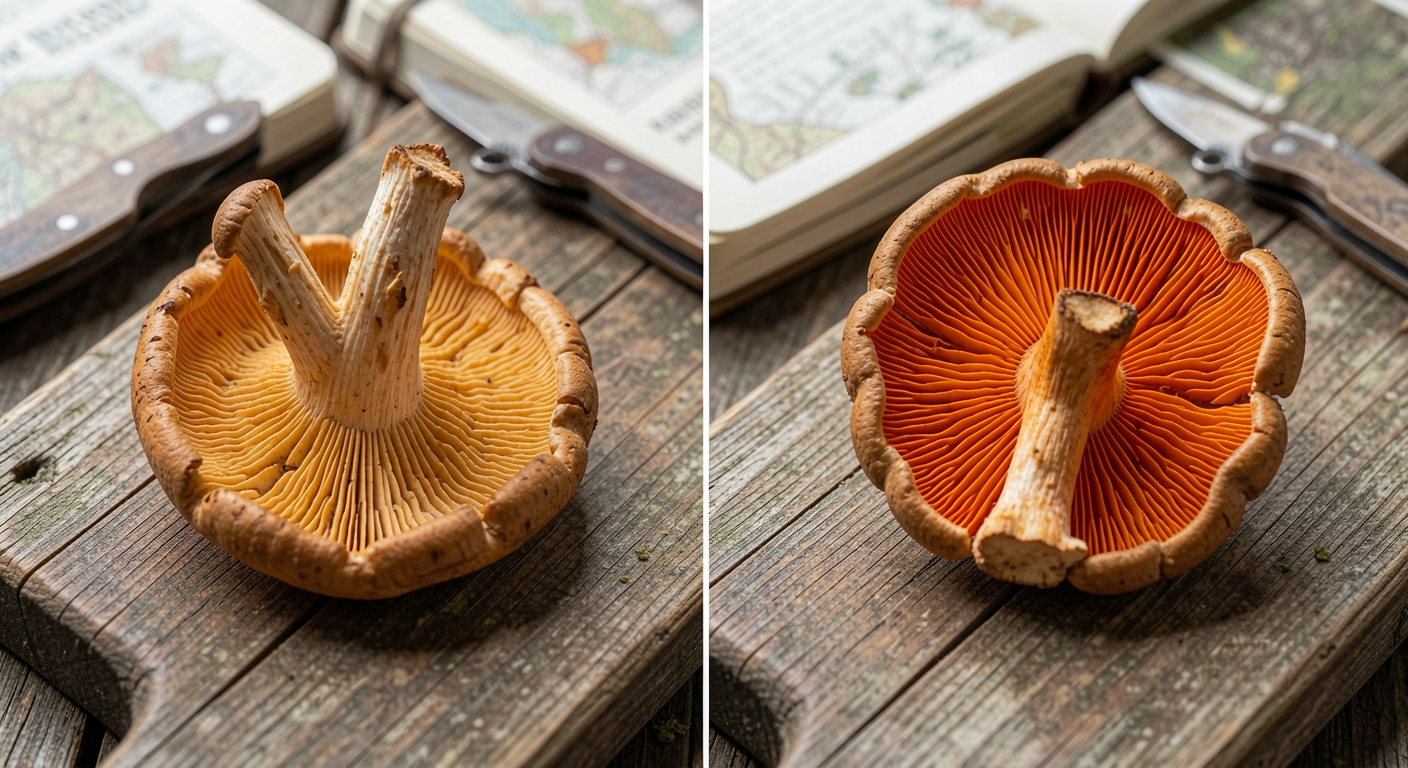
| Flesh color | White to pale yellow | Orange throughout |
| Odor | Fruity, apricot-like | Faint, sometimes unpleasant |
| Bioluminescence | None | Glows faint green in darkness |
| Edibility | Choice edible | Toxic — do not eat |
| Spore print | Pale cream to yellow | Cream to pale buff |
TL;DR: Flip the cap over and look at the "gills" — if you see sharp, crowded blades instead of blunt forking ridges, put the mushroom back down; you have a jack-o'-lantern.
Why the Mix-Up Happens (and Why It Matters)
The Color Trap
Color is the most seductive — and least reliable — feature in mushroom identification [2]. Both chanterelles and jack-o'-lanterns flash vivid warm hues that glow against forest duff. The Pacific Northwest's golden chanterelle (Cantharellus formosus, the species most commonly found west of the Cascades) and the West Coast jack-o'-lantern (Omphalotus olivascens) overlap significantly in their orange-yellow spectrum. Age and moisture further muddy the comparison: a rain-soaked chanterelle can look darker and more orange, while a dried-out jack-o'-lantern can fade toward pale gold [2].
This is why every experienced forager learns to identify by structure, not color.
What Actually Makes You Sick
The culprit compounds in jack-o'-lanterns are illudin M and illudin S — sesquiterpene toxins first isolated in the 1960s [1]. Despite older field guides attributing jack-o'-lantern poisoning to muscarine, NAMA's toxicology resources confirm the symptom profile does not match classical muscarinic poisoning [1]. Instead, victims typically experience:
- Nausea (reported in approximately 90% of cases) [1]
- Vomiting (approximately 73% of cases) [1]
- Abdominal pain, headache, and pronounced weakness [1]
- Onset within one to three hours after eating [1]
While jack-o'-lantern poisoning is rarely fatal in healthy adults, the misery is intense and can require emergency medical attention for dehydration — especially in children and the elderly [4]. Symptoms typically resolve within 24 hours, but there are no pleasant shortcuts through that window.
"Omphalotus olearius [the jack-o'-lantern mushroom] may be confused with the edible chanterelle (Cantharellus cibarius)." — Medscape Emergency Medicine, citing toxicology literature [5]
The Five-Point Field Test
This is the step-by-step process mycologists recommend for separating chanterelles from jack-o'-lanterns in the field. If a specimen fails any single step, treat it as suspect.
Step 1 — Check the "Gills"
Turn the mushroom over and examine the underside closely. This is the single most important diagnostic feature.
- Chanterelle: The underside shows shallow, blunt forking ridges that look almost like wrinkles or folds. These ridges run (decurrent) partway down the stem. They are thick, rounded, and will not snap off cleanly when you run your thumbnail across them [3].
- Jack-o'-lantern: The underside shows true gills — thin, sharp, densely packed blades that look like pages in a book. They detach easily from the cap edge, and you can clearly insert a piece of paper between them [3].
As David Arora's field companion All That the Rain Promises and More emphasizes, mastering the difference between true gills and false gills is foundational to safe foraging [3]. This single skill unlocks confident chanterelle identification.
Step 2 — Examine Growth Habit and Substrate
Where and how a mushroom grows tells you almost as much as its anatomy.
- Chanterelles are mycorrhizal: they grow in a symbiotic relationship with tree roots and always emerge directly from soil, never from wood [2]. You may find two or three together, but never a tight bouquet of a dozen or more.
- Jack-o'-lanterns are saprotrophic: they decompose dead wood and always fruit from wood or buried roots [2]. John Plischke, mycologist and founding member of the Western Pennsylvania Mushroom Club, notes that they commonly grow "a dozen or so caps together" — a visual cue visible from across a clearing [2].
The buried-wood caveat: If oak roots have rotted underground, a cluster of jack-o'-lanterns can appear to be growing from bare soil. Always look carefully for woody debris nearby and try to trace the base of the cluster [2].
Step 3 — Slice the Flesh
Cut the mushroom stem vertically with a clean knife.
- Chanterelle flesh: White to pale yellow throughout; firm and dense.
- Jack-o'-lantern flesh: Orange throughout — cap, gills, and stem — all the way to the center [4].
This orange interior is highly reliable and visible even with a small pocket knife in the field.
Step 4 — Smell It
Both mushrooms have distinctive odors, but they differ:
- Chanterelle: A pleasant, fruity scent often compared to apricots or peaches — one of the most beloved aromas in foraging [3].
- Jack-o'-lantern: A faint, sometimes slightly unpleasant or indistinct smell; none of the sweet fruitiness of a chanterelle [4].
Smell alone is not sufficient for ID, but it is a useful corroborating feature.
Step 5 — The Dark Room Test (Bonus)
This test works best when you suspect you may have jack-o'-lanterns and want a dramatic confirmation. Take fresh specimens into a completely dark room or closet and let your eyes fully adjust (this takes several minutes). Jack-o'-lanterns will emit a faint green-blue glow from their gills — a property called bioluminescence caused by a chemical reaction in the gill tissue [4]. Chanterelles produce no light whatsoever [4]. The Bay Area Mushroom Society notes that Omphalotus olivascens is "our most spectacular bioluminescent mushroom" on the West Coast and glows most strongly when mushrooms are at peak spore production [4].
Field Comparison at a Glance
| Diagnostic Check | Chanterelle ✅ | Jack-o'-Lantern ❌ |
|---|---|---|
| Underside texture | Blunt forking ridges (false gills) | Sharp blade-like true gills |
| Cluster size | Solitary or 2–3 | Dense clusters of 6–20+ |
| Growing from | Soil only | Wood or buried roots |
| Flesh when sliced | White to pale yellow | Orange throughout |
| Smell | Fruity, apricot | Faint, non-fruity |
| Bioluminescence in dark | None | Faint green-blue glow |
| Spore print color | Pale cream to yellowish | Cream to pale buff |
Pacific Northwest Context: Habitat Overlap and Season
Where They Grow in the PNW
In the Pacific Northwest, the relevant jack-o'-lantern species is Omphalotus olivascens (western jack-o'-lantern), which favors the same oak woodlands and mixed hardwood-conifer zones where chanterelles fruit abundantly [4]. Key overlap zones include:
- Oregon's Willamette Valley foothills and coast range, where Oregon white oak (Quercus garryana) is common
- Washington's southwest counties, especially where Garry oak communities meet Douglas fir forest
- Northern California's coastal redwood and oak zone, which many PNW foragers also visit
For a deeper look at the best spots to search for chanterelles (and to avoid jack-o'-lantern confusion zones), the Best Mushroom Foraging Spots in the Pacific Northwest guide covers region-by-region habitat breakdowns.
Fruiting Season
Both species fruit primarily from late summer through November in the Pacific Northwest, with peak chanterelle season usually occurring after the first significant fall rains [3]. This timing overlap is another reason new foragers get tripped up: you're often finding both species in the same woods on the same weekend.
The Species Names to Know
North American taxonomy has evolved from older field guides:
- East Coast: Omphalotus illudens (eastern jack-o'-lantern)
- West Coast: Omphalotus olivascens (western jack-o'-lantern) — the one PNW foragers encounter [4]
- You may still see Omphalotus olearius in older guidebooks; that name technically refers to the European species [4]
The chanterelle picture is also more complex than it appears: the Pacific golden chanterelle most commonly sold in markets is now classified as Cantharellus formosus (Pacific golden chanterelle) rather than the European C. cibarius, but identification features are functionally identical for the five-point test above.
"If the wood rots and grows underground, you might see grass instead of wood." — John Plischke, Mycologist, Western Pennsylvania Mushroom Club [2]
Building Confidence: Tools and Habits That Prevent Mistakes
Always Use Multiple Features
No single feature is foolproof in isolation. Professional mycologists — and NAMA itself — recommend confirming at least three independent features before consuming any wild mushroom [1]. Use the table above as your checklist, not as a one-and-done test.
Spore Prints Add Another Layer
Although chanterelle and jack-o'-lantern spore prints are both pale (cream to yellowish), getting into the habit of taking spore prints for any unfamiliar mushroom is one of the best practices a forager can develop. Lay the cap gill-side-down on white paper for 2–4 hours. If you ever get a green spore print, you have Chlorophyllum molybdites — a different, very common poisonous look-alike [1].
When in Doubt, Leave It Out
This is the one rule every serious forager agrees on: the cost of leaving a real chanterelle in the woods is zero. The cost of eating a jack-o'-lantern is several hours of suffering. The 10 Edible Mushrooms Every Pacific Northwest Forager Should Learn First post walks through the full beginner list — chanterelles included — with the same multi-feature approach.
Use Technology as a Second Opinion
A quality field guide app can be a powerful cross-check — especially for the gill texture detail that new foragers often second-guess themselves on. Our photo-identification tool lets you photograph your find right in the field, returning a probable ID alongside look-alike warnings, edibility notes, and habitat data. As we examined in our head-to-head test of AI mushroom identification apps, no app replaces hands-on learning, but the best ones catch obvious mismatches before they become medical emergencies. Use the app to flag your find, then walk through the five-point checklist yourself before anything goes in your basket.
The difference between a sautéed chanterelle and an evening in the bathroom really does come down to about 30 seconds of careful observation. Make it a habit, and you'll be picking chanterelles with confidence for the rest of your foraging life.
Frequently asked questions
Can eating a jack-o'-lantern mushroom kill you?▾
Jack-o'-lantern mushrooms are toxic but not typically fatal to healthy adults. The sesquiterpene toxins illudin M and illudin S cause severe gastrointestinal distress — nausea, vomiting, abdominal pain, and diarrhea — usually beginning within 1–3 hours of ingestion. While very unpleasant and potentially dangerous for children, the elderly, or those with compromised health, poisonings are rarely life-threatening. Seek medical attention if symptoms are severe or persist.
What is the single easiest way to tell a chanterelle from a jack-o'-lantern?▾
Flip the mushroom over and examine the underside. Chanterelles have blunt, forking ridges (false gills) that run partway down the stem and feel like rounded folds — they won't snap off cleanly. Jack-o'-lanterns have true gills: thin, sharp, crowded blades like pages in a book. This one feature is the most reliable separator and is visible with the naked eye in any lighting.
Do jack-o'-lantern mushrooms really glow in the dark?▾
Yes. Fresh jack-o'-lantern mushrooms (Omphalotus olivascens in the Pacific Northwest) emit a faint green-blue bioluminescence from their gills. The glow is caused by a chemical reaction in the gill tissue and is visible in total darkness after your eyes have fully adjusted. The effect is strongest when mushrooms are at peak spore production. Chanterelles produce no bioluminescence whatsoever.
Where do jack-o'-lantern mushrooms grow in the Pacific Northwest?▾
On the West Coast, the relevant species is Omphalotus olivascens (western jack-o'-lantern). It grows from wood or buried root systems, especially around oaks (Quercus garryana), in mixed hardwood-conifer forests. Key overlap areas with chanterelle habitat include the Willamette Valley foothills, southwest Washington's Garry oak communities, and the coastal redwood-oak zone of northern California.
Can I use a mushroom ID app to tell chanterelles from jack-o'-lanterns?▾
A good photo-ID app can flag likely matches and surface critical look-alike warnings, making it a valuable second opinion in the field. However, apps work best as a cross-check alongside physical examination — not as a standalone identification method. Always verify gill structure, growth habit, flesh color, and smell yourself before eating any wild mushroom.
What other mushrooms are commonly confused with chanterelles?▾
Besides the jack-o'-lantern, the false chanterelle (Hygrophoropsis aurantiaca) is another look-alike. It has true gills (though forked), grows from soil or wood debris, and is considered toxic to many people. A third potential confusion species is the wooly chanterelle (Turbinellus floccosus), which has a vase-like form and scaly cap. Using multiple diagnostic features — gill type, flesh color, smell, growth substrate, and spore print — is essential to rule out all look-alikes.
Sources
- Mushroom Poisoning Syndromes — North American Mycological Association (NAMA)
- Chanterelles: Pittsburgh Quarterly — Featuring mycologist John Plischke
- Foraging for Chanterelle Mushrooms — Grow Forage Cook Ferment (cites David Arora)
- Jack-O'-Lantern Mushroom (Omphalotus olivascens) — Bay Area Mushrooms / Mycological Society of San Francisco
- Mushroom Toxicity — Medscape Emergency Medicine
Keep reading
Ready to see it for yourself?
Back to home →